Home Meat Slicers, Grinders and Stuffers: The Full Guide
A meat slicer for home use cuts food into slices; a grinder turns meat into ground portions, and a stuffer fills sausage casings. Choose a tool for the job you do most, and check its cleaning and operating needs.
On this page (7 sections)
A meat slicer for home use is for even slices, while a grinder turns meat into ground portions and a stuffer fills casings. Choose based on the job you do most, then account for cleaning, storage and safe handling.
These tools serve different stages of food preparation. A slicer portions cooked or raw foods, a grinder breaks meat down, and a stuffer shapes ground meat into sausages.
If you're choosing a slicer first, our home meat slicer guide covers the key buying factors. For grinding, start with the home meat grinder guide, and use the sausage gear guide to compare stuffing options.
What does each home meat machine do?
A slicer, grinder and stuffer each perform a distinct task. You don't need all three unless your cooking routine includes slicing, grinding and sausage making.
| Tool | Main job | Useful for | Check before buying |
|---|---|---|---|
| Meat slicer | Cuts food into slices | Deli meat, roasts, cheese, bread and produce | Blade size, thickness control, cleaning and safe handling |
| Meat grinder | Turns meat into ground portions | Burgers, meatloaf and ground meat for sausage | Grinding plates, motor, capacity and jam handling |
| Sausage stuffer | Fills casings with ground meat | Links and other stuffed sausages | Capacity, tube sizes and how it fits your workflow |
Some meat grinders include a sausage funnel. That can support occasional stuffing, but the grinder's main job is still grinding.
A standalone stuffer is designed for filling casings. If you're weighing the two approaches, see sausage stuffer vs grinder tubes.
Which meat tool should you buy first?
Buy the tool that matches the task you repeat most often. If you usually slice roasts or deli meat, a slicer gives you the direct path; if you make burgers, a grinder is the better starting point.
For sausage making, think through the full process. A grinder prepares the meat, while a stuffer fills casings, so regular sausage batches may call for both tools.
What should you look for in a meat slicer for home use?
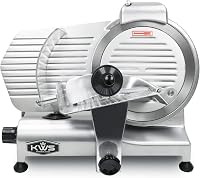
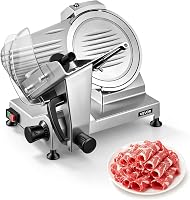
A home slicer should match the size and thickness of food you plan to cut, and have parts you can handle and clean carefully. Blade diameter and thickness adjustment are useful starting points.
How much thickness adjustment do you need?
Choose a range that covers your usual cuts. For deli-thin portions, you'll want fine adjustment; for thicker slices, check the stated maximum rather than assuming every slicer can cut the same thickness.
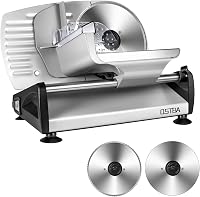
The CUSIMAX 8.7-Inch Meat Slicer adjusts from 1 to 20 mm, while the OSTBA 7.5-Inch 200W Meat Slicer adjusts from 0 to 15 mm. Both have removable blades and food carriages.
Blade size is another practical limit. A blade's diameter doesn't tell you the maximum food size on its own, so compare the machine's usable carriage and the foods you expect to slice.
What slicer safety and cleanup features matter?
Use the food pusher and safety guard as directed, and keep hands away from the blade. A removable carriage or blade can help with cleaning, but detaching parts doesn't remove the need to handle a sharp blade carefully.
CUSIMAX says its slicer should not run continuously for more than 7 minutes. Its instructions also say not to slice frozen foods, meat with bones or food in wrappers, so read the manual for the exact model before use.
OSTBA describes a safety lock that requires pressing the lock and power button together. Its carriage, blade, food pusher and other listed parts detach for cleaning.
For more on frozen food limits, read can a meat slicer cut frozen meat?. For thick slices, see how thick can a meat slicer cut?.
When does a meat grinder make more sense?
A grinder makes sense when you want ground meat for burgers, meatloaf or sausage. Select one based on batch size, the plates you need and whether you plan to stuff casings with it.
The Weston #12 Electric Meat Grinder includes medium and coarse grinding plates, a cutting blade, a sausage funnel and a stomper. Weston lists a 750-watt, 1 HP motor, two speeds and a reverse function to help prevent jams.
The grinder's slower first speed is intended for stuffing, while the faster speed is for grinding. If stuffing is a regular part of your routine, compare this combination with a dedicated stuffer instead of assuming an included funnel will suit every batch.
Capacity and working pace matter more than a large motor number alone. Our meat grinder size guide helps you match grinder size to the amount you process.
What do the grinder plates change?
The plate openings shape the ground texture. A coarse plate leaves larger pieces than a medium plate, which can change the feel of a burger or sausage mixture.
Think about the recipes you make before adding plates or accessories. For a home grinder setup overview, see what makes a good meat grinder for home use.
How do you reduce grinder clogs?
Keep meat preparation and feeding steady, and use reverse only as the manufacturer directs. If a grinder keeps clogging, stop it and follow its manual rather than reaching into the feed opening.
The meat grinder clogging guide covers common causes and safe next steps. Keep the cutting parts clean, and see how to sharpen meat grinder blades and plates when upkeep is needed.
When is a separate sausage stuffer worth it?
A separate stuffer is useful when filling casings is a regular job and you want a dedicated tool for that step. It doesn't grind meat, so pair it with ground meat from a grinder or another source.
The Hakka 7 lb Vertical Sausage Stuffer has a stated 7 lb capacity and four stainless steel stuffing tubes: 16, 22, 32 and 38 mm. Hakka describes a two-speed setup and an air-release feature in the piston.
A dedicated stuffer adds another appliance to store and clean. Before buying, decide whether you make enough sausage to justify separating grinding from stuffing.
For manual operation steps, see how to use a manual sausage stuffer. If you're deciding between a grinder funnel and a separate unit, compare the workflow in sausage stuffer vs grinder tubes.
How should you plan the whole workflow?
Plan the order of work before buying equipment. A typical sausage workflow starts with grinding and ends with stuffing, while slicing is a separate task for foods you want in portions.
- Decide which foods you want to slice, grind or stuff.
- Estimate the largest batch you expect to prepare at one time.
- Check the machine's dimensions and the counter space available.
- Identify removable parts and how you'll clean them carefully.
- Read the manual for operating limits and food restrictions.
- Store accessories together so you can find the right plate, funnel or tube.
The order matters because a grinder and stuffer do different jobs. If you grind meat and stuff it in one session, prepare the grinder parts, casings and stuffer before starting.
Home equipment takes space even when it isn't in use. Measure cupboards and counter space, and make sure you can lift, assemble and clean each machine comfortably.
Which setup fits your cooking routine?
The best setup depends on the task you do most and how often you do it. Start with one tool for a clear need, then add equipment only when your cooking routine calls for it.
- Slicing roast, cheese or bread: Choose a slicer with a thickness range that fits your usual portions and removable parts you can clean carefully.
- Making ground meat for burgers: Start with a grinder and the plates that match your preferred texture.
- Making sausage now and then: A grinder with a stuffing funnel may cover occasional batches.
- Filling casings often: A dedicated stuffer can separate that step from grinding.
- Doing all three jobs: Plan for separate tools, cleaning time and storage space.
For a direct comparison between two slicing tools, read meat slicer vs electric knife. Pick a slicer for even portions, a grinder for ground meat, and a stuffer when casing work is frequent.
Frequently asked questions
Can a meat slicer cut meat with bones?
No. Don't feed meat with bones into a slicer unless the manual for that exact machine explicitly allows it.
CUSIMAX's instructions say not to slice meat with bones, and a bone can interfere with a controlled cut.
Is frozen meat safe to slice at home?
Follow the model's manual. CUSIMAX's instructions say not to slice frozen food.
Check the exact instructions before use and contact the brand if they don't clearly address your intended food.
Can a meat grinder make sausage without a stuffer?
A grinder with a stuffing funnel can fill casings for some home batches. If you make sausage often, a dedicated stuffer gives you a separate tool for casing work, while the grinder handles the ground meat.
How many tools do I need to make sausage at home?
You need a way to prepare ground meat and a way to fill the casings. A grinder with a stuffing funnel may do both steps, while a separate stuffer is another option for regular batches.
The amount you make and the workflow you prefer should guide the choice.
Frequently asked questions
What is the difference between a meat slicer and a meat grinder?
A meat slicer cuts food into slices, while a meat grinder turns meat into ground portions. Choose a slicer for deli-style portions, roasts or other even slices, and a grinder for burgers or ground meat recipes.
Neither tool replaces a dedicated sausage stuffer for regular casing work.
Can one machine slice, grind and stuff meat?
Some grinders include sausage stuffing accessories, but they don't slice meat into portions. A separate slicer handles that job.
For sausage, a grinder can prepare the ground meat and a stuffer can fill casings.
The right setup depends on how often you do each step.
Can I use a home meat slicer on frozen meat?
Follow the instructions for the exact slicer before cutting frozen meat. CUSIMAX's instructions say not to slice frozen food, so follow that restriction for its slicer.
Contact the brand if you need clarification.
What should I check before buying a home meat slicer?
Check blade diameter, thickness range, removable parts and food pusher. Make sure the slicer fits your counter and that you can clean around the blade carefully.
A wider thickness range helps only if it covers the cuts you plan to make.
Do I need a separate sausage stuffer if my grinder has a stuffing funnel?
A grinder with a stuffing funnel can handle occasional sausage batches, while a separate stuffer may suit repeated casing work. Compare how much meat you plan to fill, whether you prefer separate grinding and stuffing steps, and how much counter and storage space you have.