Can a Meat Slicer Cut Bread?
Yes, a meat slicer can cut bread, but only on its widest setting and only for firm loaves like sourdough or a day-old country white. Soft sandwich bread and very fresh loaves tear instead of slicing cleanly, so a long serrated bread knife still does that job better.
On this page (10 sections)
- How does a meat slicer handle bread compared with a knife?
- What kind of bread can a meat slicer actually cut?
- Which thickness setting works for bread?
- Why does soft bread tear on a meat slicer?
- How do you slice bread safely on a meat slicer?
- Will bread damage the blade or the motor?
- Which home meat slicer is best for bread?
- Can you slice frozen or day-old bread on a meat slicer?
- What are the limits of cutting bread on a meat slicer?
- So, can a meat slicer cut bread?
Yes, a meat slicer can cut bread, but only on its widest setting and only for firm loaves like sourdough or a day-old country white. Soft sandwich bread and very fresh loaves tear instead of slicing cleanly, so a long serrated bread knife still does that job better.
The blade type, the thickness setting and the bread's texture decide whether you get clean slices or a mangled loaf. A home slicer earns its counter space when it cuts bread evenly, so it helps to know where it works and where it doesn't.
How does a meat slicer handle bread compared with a knife?
It slices faster and more evenly than a knife on firm bread, but a knife wins on soft or crusty loaves. The slicer's circular blade cuts in one continuous pass, so thickness stays consistent from the first slice to the last.
A bread knife's serrated edge saws through crust without squashing the crumb. The slicer's smooth edge pushes straight through, which works when the bread is dense enough to resist.
On soft white sandwich bread, the smooth blade compresses the loaf before it cuts. You get bent slices with a smeared crust rather than clean edges.
On crusty sourdough, the blade has to power through a hard shell. That is where blade sharpness and motor strength matter most.
What kind of bread can a meat slicer actually cut?
Firm, dense breads cut well; soft and very fresh breads do not. The blade needs resistance to slice cleanly, and the loaf needs a flat base to ride against the food guide.
Good candidates include:
- Day-old country white or farmhouse loaves
- Sourdough that has cooled completely
- Rye and pumpernickel
- Bread that has been chilled or partly frozen
- Thick slices for toast, sandwiches and French toast
Poor candidates include fresh brioche, milk bread, soft sandwich loaves and bread still warm from the oven. The crumb is too fragile and the blade crushes it.
For anyone planning to use a slicer for bread regularly, our guide to how thick can a meat slicer cut explains the settings you'll need.
Which thickness setting works for bread?
Use the widest setting your slicer offers, usually around 1/2 inch on a home model. Bread needs more clearance than deli meat because the crumb is springy and the slice must hold its shape.
The Cuisinart Kitchen Pro Food Slicer adjusts from 1/32 inch to 1/2 inch with its slice control knob. That top end is wide enough for sandwich bread and toast slices.
The NutriChef 200W and NutriChef Automatic models both offer a 0–15 mm range, which reaches about 0.6 inch. That gives you room for thicker slices when the loaf is firm.
Start at the widest setting and work down only if the loaf holds together. Thin bread slices on a slicer tend to tear, so there is little point going below about 3/8 inch.
Why does soft bread tear on a meat slicer?
Soft bread tears because the blade compresses it before it cuts. Fresh crumb has a lot of air and little structure, so the smooth circular blade squashes the loaf against the guide.
Three things make it worse:
- Bread that is still warm, which is extra soft
- A dull blade, which pushes rather than cuts
- A fast feed rate that shoves the loaf into the blade
Chilling the loaf for 20 to 30 minutes firms the crumb without freezing it. A partly frozen loaf slices far more cleanly, which is why our post on whether a meat slicer can cut frozen meat covers similar technique.
If the loaf still tears at the widest setting, the bread is simply too soft for the machine. Reach for the bread knife.
How do you slice bread safely on a meat slicer?
Keep the loaf against the food guide and use the food pusher, never your hand. The blade spins fast and the crust makes it harder to feel resistance through the loaf.
Set the thickness before you start the motor. Changing the setting mid-cut can move the carriage and jerk the loaf into the blade.
Feed the loaf slowly and let the blade cut. Pushing harder does not make cleaner slices and it strains the motor on dense bread.
Keep the carriage and food guide clean between loaves. Crumbs build up and make the loaf slide, which produces uneven slices.
The Cuisinart blade, food guide and stainless steel carriage all remove for cleanup.
Stop the motor and unplug the slicer before you reach anywhere near the blade, even to brush crumbs away.
Will bread damage the blade or the motor?
Bread does not damage a stainless steel blade, but hard crusts put extra load on the motor. A home slicer built for deli meat meets more resistance in a crusty artisan loaf than in a slice of roast beef.
Blade material matters less than sharpness. A dull blade drags on crust and pushes on soft crumb, so it fails both ways.
Keep the blade clean and sharp and bread slicing stays easy.
Motor size is the bigger limit. The Cuisinart Kitchen Pro has a 130-watt motor.
The NutriChef 200W and NutriChef Automatic models run 200 watts. More power helps on dense rye and hard crusts, but no home slicer is meant for continuous heavy bread cutting.
Slice a few loaves at a time and let the motor rest between them. Our CUSIMAX meat slicer review covers how another home model handles similar loads if you're comparing options.
Which home meat slicer is best for bread?
Pick a slicer with a wide thickness range and a strong motor for bread. The widest setting matters more than anything else, because bread needs clearance the blade can't give at deli settings.
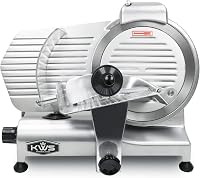
The Cuisinart Kitchen Pro Food Slicer is the best fit for bread among these three. Its 7.5 inch stainless steel blade and 1/2 inch top setting handle firm loaves, and the removable carriage makes crumb cleanup simple.
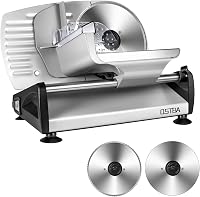
The NutriChef 200W Meat Slicer offers 200 watts and a 0–15 mm dial. That extra power helps on dense rye and crusty loaves.
The NutriChef Automatic Meat Slicer shares the same 200W motor and 15 mm range, with a food pusher for safety. It's a reasonable second choice if the first two are out of stock.
If bread is a big part of your routine, compare these against other options in our roundup of the best meat slicer for the money. A model with a wide range and a strong motor covers both deli meat and bread.
Can you slice frozen or day-old bread on a meat slicer?
Yes, partly frozen or day-old bread is the easiest bread to slice on a meat slicer. The firmer crumb holds its shape against the blade and the crust doesn't compress under the guide.
Chill fresh bread for 20 to 30 minutes before slicing. It firms enough to cut cleanly without becoming hard enough to strain the motor.
Day-old bread works for the same reason. It has lost some moisture, so the crumb is denser and less likely to tear.
Skip bread straight from the freezer. Rock-hard loaves put heavy drag on the blade and motor, and the crust can chip.
Let the loaf soften first.
What are the limits of cutting bread on a meat slicer?
The main limits are loaf shape, crumb softness and motor size. A round sourdough boule doesn't sit flat on the carriage, so it wobbles and cuts unevenly.
Cut it in half first so each piece has a flat base.
Very soft bread never slices well on a smooth blade, no matter the setting. Save those loaves for the bread knife.
Small motors struggle with hard crusts over several loaves. Slice in short batches and let the machine rest.
Finally, a meat slicer is not a bread machine or a dedicated bread slicer. It does a good job on firm loaves and a poor one on soft crumb, and that's the honest limit of the tool.
So, can a meat slicer cut bread?
Yes, a meat slicer can cut bread when the loaf is firm and the blade is set wide. Use the widest setting, chill or partly freeze soft loaves first, and keep the bread pressed against the food guide.
Pick a slicer with a 1/2 inch or wider range if bread is a regular job. The Cuisinart Kitchen Pro Food Slicer covers both bread and deli meat well, and the two NutriChef models add more motor power for dense loaves.
For soft sandwich bread and very fresh loaves, keep the bread knife on the counter. The slicer earns its space on firm, day-old and partly frozen bread, where it delivers even slices fast.
That's the honest answer to whether a meat slicer can cut bread: it can, within those limits.
Frequently asked questions
Will a meat slicer cut a whole loaf of bread evenly?
A slicer can cut a whole loaf evenly only if the loaf stays square and steady against the food guide. Loaves with an uneven top or a soft crumb wobble as they pass the blade.
Square off the ends first, or cut the loaf in half so each piece sits flatter on the carriage.
Does bread ruin the blade on a meat slicer?
No, bread does not ruin a stainless steel blade, but a hard crust on fresh artisan loaves puts more drag on the motor than cold meat does. Slice slowly and let the blade do the work.
Avoid crusty loaves if your slicer's motor is small.
Can a meat slicer handle crusty sourdough?
It can, if the blade is sharp and you keep the loaf pressed against the food guide. Sourdough crust is tough and the loaf is often round rather than square.
Cut the loaf in half lengthwise first so it sits flat, then slice on the widest setting.