What Makes a Good Meat Grinder for Home Use?
A good meat grinder for home use matches your usual batch size, has controls that suit your tasks, and comes apart for cleaning. Decide whether you'll grind occasionally, process larger batches, or also make sausage before comparing models.
On this page (7 sections)
- What makes a good meat grinder for home use?
- How should you match grinder size to your batch?
- Which features matter for grinding and sausage?
- Which home meat grinder fits your routine?
- How important are cleaning and storage?
- How can you reduce grinder clogs?
- How do you choose a good meat grinder for home use?
A good meat grinder for home use matches your usual batch size, has controls suited to your tasks, and comes apart for cleaning. Decide whether you plan to grind meat occasionally, process larger batches, or make sausage before you compare models.
There is no single feature that makes a grinder right for every kitchen. Motor details, reverse controls, included plates, size and storage all affect how well it fits your routine.
What makes a good meat grinder for home use?
A good home grinder has enough capacity for your normal batches, practical controls and parts you can clean and store. The right choice depends on how often you grind and whether you also want to stuff sausage.
Start with the amount of meat you expect to process at one time. A compact grinder may fit an occasional home routine, while a faster stated grinding rate may suit frequent or larger batches.
Controls are another practical difference. Reverse can help clear jams, and a slower setting can be useful when stuffing sausage.
Compare the controls available on each grinder with the tasks you plan to do.
Finally, think about cleanup and storage. A grinder that disassembles easily may be simpler to wash, while a larger machine needs more counter or cabinet space.
How should you match grinder size to your batch?
Choose a grinder based on the amount you expect to grind in one session, rather than the size number alone. Compare stated capacity and grinding rate, then consider how often you'll use it.
The Weston #12 is described as grinding 4–5 lb per minute and includes two speeds and reverse. The LEM #8 is described as processing 2–3 lb per minute, with forward and pulse reverse controls.
Those rates are stated figures, not a guarantee of the pace you'll get with every cut or batch. Prepare meat as directed and follow the grinder's instructions, including any limits on continuous use.
If you're unsure how much capacity you need, use our guide to choosing a meat grinder size. It can help you think through your batch size before you pick a model.
Which features matter for grinding and sausage?
Look for controls and attachments that match the jobs you plan to do. A grinder that includes stuffing parts may suit a kitchen where homemade sausage is part of the routine.
A reverse function can help if meat slows or jams in the grinder. The Weston and LEM have reverse controls.
Both AAOBOSI models have auto-reverse, which is designed to help prevent clogging and jamming.
For sausage, check whether the grinder includes a stuffing tube or funnel and whether it has a speed intended for stuffing. The Weston has a slow first speed for stuffing, along with a sausage stuffing funnel and spacer.
LEM includes a stuffing tube and plate.
The guide to grinding your own hamburger meat covers the steps after you choose a grinder. If sausage is your main goal, compare the attachments and controls with the steps in our sausage stuffer vs meat grinder guide.
Which home meat grinder fits your routine?
The best fit depends on how often you grind, your batch size and whether you want digital controls or sausage parts. These four options cover different combinations of speed, controls and included accessories.
Weston #12 Electric Meat Grinder
The Weston #12 suits home cooks who want two speeds, reverse and sausage stuffing accessories in one machine. It has a die-cast aluminum body, metal gears and a stated grinding rate of 4–5 lb per minute.
Its cam action headlock secures the grinding head for connection and removal. Two stainless steel grinding plates, medium and coarse, are included.
Consider it if you process larger batches or plan to make sausage. At 13.5 lb, it also weighs more than the LEM #8, so account for handling and storage space.
LEM #8 Countertop Meat Grinder
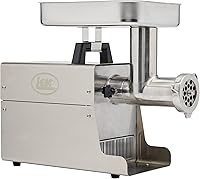
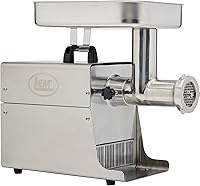
The LEM #8 suits occasional home grinding where a compact countertop machine is a priority. It has a 575-watt motor and a stated rate of 2–3 lb per minute.
The aluminum head locks with a quarter turn and disassembles for cleaning. LEM describes the motor as quieter than expected, and says the grinder is not for grinding bones.
Consider it if your batches are modest and you want a grinder that can also stuff sausage. Check its dimensions against your counter and storage space before choosing.
AAOBOSI Digital Meat Grinder
The AAOBOSI Digital Meat Grinder suits cooks who want a touch screen with multiple speed settings and presets. It offers 9 speed settings and 9 presets, plus auto-reverse and built-in accessory storage.
The grinder includes sausage and kibbe attachments, vegetable cutting attachments, two blades and three grinding plates. AAOBOSI gives a grinding rate of up to 4 lb per minute and advises avoiding continuous use over 10 minutes to prevent overheating.
Consider it if presets and accessory storage fit your routine. Follow AAOBOSI's continuous-use guidance, and hand-wash attachments for best results.
AAOBOSI 3-Speed Touch Screen Grinder
The AAOBOSI 3-Speed Touch Screen Grinder suits home cooks who want dedicated meat, sausage and reverse settings. It has a touch screen, auto-reverse and built-in storage for accessories.
AAOBOSI gives a rate of up to 4 lb per minute and advises against continuous use over 10 minutes to prevent overheating. It includes three grinding plates, two blades, a sausage tube and a kibbe kit.
Consider it if three task-focused settings are enough and you want the accessories stored with the grinder. Hand-wash attachments for best results.
How important are cleaning and storage?
Cleaning and storage matter because the grinder has parts that need washing after use and a body that needs a place to live. Compare how each model disassembles and where its accessories go.
The LEM head disassembles easily, and its parts can be washed with warm, soapy water. The AAOBOSI models include built-in accessory storage, and their care guidance recommends hand-washing attachments for best results.
The Weston has a die-cast aluminum body and a headlock designed to make the grinding head faster to connect and disconnect. Follow the care instructions for each machine, and don't assume every part can go in a dishwasher.
Measure your counter or cabinet before buying. Include room to set out the parts you need during grinding and to let cleaned parts dry.
How can you reduce grinder clogs?
To reduce clogs, prepare meat as directed, avoid overloading the grinder and use reverse if the model provides it. Follow the grinder's instructions for clearing a jam.
The Weston has a reverse function described as helping prevent jams. LEM offers pulse reverse, and both AAOBOSI models have auto-reverse to help prevent clogging and jamming.
If your grinder keeps clogging, stop and check the assembly, meat preparation and operating steps in the manual. Our guide on why a meat grinder keeps clogging walks through common causes.
How do you choose a good meat grinder for home use?
Choose a good meat grinder for home use by matching its stated rate and controls to your usual batch, then checking cleanup, attachments and storage. For sausage, prioritize a stuffing tube or funnel and a suitable stuffing speed; for occasional grinding, a compact machine may be easier to manage.
Compare the Weston #12 Electric Meat Grinder for two speeds and sausage accessories, or the LEM #8 Countertop Meat Grinder for occasional grinding in a compact format. The AAOBOSI options add touch-screen controls and built-in accessory storage, with different speed layouts.
For more options, see our best electric meat grinders for home use. Pick based on your batch size and routine, then follow the grinder's instructions for use and care.
Frequently asked questions
What is a good meat grinder for home use?
A good home meat grinder suits the amount you plan to process, offers useful controls such as reverse, and is manageable to clean and store. If you also make sausage, look for a stuffing tube or sausage accessories.
Compare the stated grinding rate with your batch size and expected work pace.
How much power does a home meat grinder need?
There is no single wattage that makes a grinder right for every home. Compare the stated wattage and grinding rate alongside the tasks you plan to do, and check any guidance about continuous use.
Do not treat a peak wattage figure as a complete measure of performance.
Can one meat grinder grind meat and stuff sausage?
Some electric meat grinders include sausage stuffing parts, so one appliance can handle both jobs. Check which tubes or plates are included and whether the grinder has a slower speed suited to stuffing.
Grinding and stuffing are different tasks, so the right controls and attachments matter.
How do I choose between a #8 and #12 meat grinder?
Choose by your typical batch size and how often you grind, then compare the specific models' dimensions, weight, stated rate and features. A size number alone does not tell you how much work a grinder can handle.
See our #8 vs #12 meat grinder guide for a closer comparison.