Meat Slicer vs Electric Knife: Which Should You Buy? (October 2026)
Choose a meat slicer for repeatable thickness settings and an electric knife for carving meat and bread. Your meat slicer vs electric knife choice depends on the cuts you make, how often you make them and where you can store the tool.
On this page (6 sections)
Choose a meat slicer for repeatable thickness settings and an electric knife for carving meat and bread. The meat slicer vs electric knife decision comes down to your usual cuts, how often you make them and the space you can spare.
A slicer holds food on a carriage and moves it past a round blade. An electric knife is held in your hand and guided through the food, so your motion controls the cut.
If you make sandwiches often or portion meat and cheese for several meals, start with a slicer. If you carve a roast now and then or also cut bread, an electric knife is likely the simpler choice.


Meat slicer vs electric knife: which gives more even slices?
A meat slicer gives you a set thickness for repeated cuts, while an electric knife relies on your hand to guide each pass. That makes the slicer the clearer choice when matching slices matter.
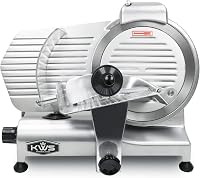
The CUSIMAX slicer adjusts from 1–20 mm. Set the thickness, place suitable food on the carriage, and secure it with the food pusher before switching the blade on.
That arrangement helps you make a row of similar cuts from a piece that sits securely on the carriage. Food shape still matters: an uneven or awkward piece can be harder to hold and guide.
An electric knife has a serrated blade that moves back and forth. It cuts meat and bread, but it has no thickness dial or carriage to guide successive slices.
How does a meat slicer compare with an electric knife for thin cuts?
A meat slicer is better for thin, repeatable cuts because you can set the thickness before you start. An electric knife can make a thin carving, but the result depends more on your grip and movement.
For sandwich meat or cheese, the slicer's adjustment range gives you a direct way to choose a thin slice and repeat it. Secure the food with the pusher, keep your hands clear of the blade, and move the carriage smoothly.
An electric knife can be useful when the cut needs to follow the shape of a roast or loaf. For a few slices, flexibility may matter more than exact matching.
If cut depth is a key part of your choice, see how thick a meat slicer can cut. That guide can help you decide whether a slicer's range matches the food you buy.
Which tool handles more kinds of food?
An electric knife suits carving meat and cutting bread, while a slicer suits foods that sit securely on its carriage. Check the instructions for the exact appliance and food before cutting.
The CUSIMAX slicer is described for meat, cheese, bread, vegetables and fruit. Its instructions rule out frozen food, meat with bones and food in wrappers.
The Cuisinart electric knife has a micro-serrated blade for meat and bread. It also comes with a serving fork and bamboo cutting board, which suit carving and serving at the table.
A slicer may be useful for suitable portions of roast beef, turkey or cheese when you want a run of slices. The food needs to fit and stay secure on the carriage; a handheld knife is easier to guide around a large roast or irregular shape.
For setup and handling steps, read how to use a deli slicer at home. The guide is useful if you are considering a slicer but have not used a carriage and food pusher before.
Which is better for carving a roast or holiday turkey?
An electric knife is the better fit for carving a roast or turkey because you can guide it around the food and cut across different sections. The Cuisinart set includes a serving fork to help steady meat while you carve.
A slicer can cut suitable cooked meat, but the food must sit securely on its carriage. Large or uneven shapes may be harder to position than a compact piece.
Choose a knife if you mainly carve at the table and want to move around the roast. Choose a slicer if you usually portion suitable food on a counter and want more control over thickness.
Is a slicer or electric knife better for bread?
Either tool can suit bread, but an electric knife is the simpler choice when bread is the main job. Its serrated blade is designed for bread, and you guide it across the loaf by hand.
The CUSIMAX slicer is also described for bread. It can make sense if you want one countertop tool for bread plus suitable meat, cheese or produce, and you have room for its carriage and blade assembly.
Keep the blade clean between foods. If you switch from meat to bread, pause and clean the parts that touched food before continuing.
How should you set up and use a meat slicer or electric knife?
Set up a slicer on a stable counter and secure food with its pusher; use an electric knife on a stable cutting board with a steady grip. Read the appliance instructions before the first cut.
For the CUSIMAX slicer, place food on the carriage and fit the food pusher onto its guide handle so it holds the food firmly. Set the thickness before turning the switch on, and keep your hands away from the moving blade.
The CUSIMAX instructions say not to run the appliance continuously for more than 7 minutes. They also say not to slice frozen food, meat with bones or wrapped food.
For an electric knife, position the food on a cutting board and hold it steady with a fork or other safe grip. Use the trigger as directed, guide the blade in a controlled line, and keep the cord and free hand clear of the cutting path.
Don't force either tool through food. If a piece shifts, stop the appliance before repositioning it, and follow the manufacturer's directions for removing blades or other parts.
What setup mistakes should you avoid?
The main slicer mistakes are leaving food unsecured, choosing unsuitable food and running the appliance too long. For an electric knife, the common problems are an unstable cutting board, a rushed stroke or hands placed near the moving blade.
Don't use the slicer without its food pusher in place. Avoid frozen food, bones and wrappers with the CUSIMAX model, and make sure the appliance has a stable surface before switching it on.
With an electric knife, don't pull the blade through at an angle or twist it while cutting. Let the reciprocating blade do the cutting, keep the food steady, and switch off before setting the knife down.
Rushing cleanup is another avoidable mistake. Disconnect the appliance as directed and wait until moving parts stop before handling removable blades.
How much space and cleanup do the tools need?
An electric knife is easier to store between occasional jobs, while a slicer needs room for its carriage and removable parts. The Cuisinart set has a storage tray and the Hamilton Beach set has a storage case.
The CUSIMAX slicer's blade, food carriage and food pusher are removable. Taking those parts off gives you access to surfaces where food can collect, but it also means you need time and a place to clean and reassemble them.
The Cuisinart set's handle, blade and fork fit in a tray that sits on the included compact cutting board. The Hamilton Beach set includes a storage case, which keeps its carving pieces together.
A slicer needs counter space while you work and cupboard space when you put it away. Compare the best electric food slicers for home use if you want to compare countertop models, or start with the home meat slicer guide for broader choices.
How do you clean and care for each tool?
Clean each tool after use, following the instructions for its removable parts and electrical handle. Slicers have more food-contact pieces to take apart, while an electric knife has a blade and powered handle to manage.
The CUSIMAX slicer's blade, carriage and food pusher come off for cleaning. Remove them only as instructed, handle the blade carefully, wash food-contact parts, and let them dry before reassembly.
For the Cuisinart knife, the power handle has a release button for cleanup, and the blade and fork are designed for dishwasher-safe cleanup. Follow the care directions for the exact parts.
The Hamilton Beach knife's stainless steel blades remove for cleaning. Keep the powered handle away from water, and use the care directions for the blade and fork.
Never reach toward a moving blade, and don't carry a powered tool by its cord. Store blades so they are protected and cannot be handled accidentally.
Which is easier for occasional use?
An electric knife is more practical for occasional carving because it stores as a set and doesn't need a machine carriage. You can bring it out for a roast or loaf, then put it away in its tray or case.
A slicer may still suit you if you regularly want even cuts of meat, cheese or bread. For a once-a-month roast, the setup, cleaning and storage of a countertop machine may be more than the task calls for.
If your routine includes batches of thin sandwich slices, the slicer's thickness control may justify that extra setup. If you mostly carve meat for a meal, the knife keeps the process straightforward.
Who should buy a meat slicer, and who should skip it?
Buy a meat slicer if you often want repeated slices at a chosen thickness and have counter and storage space. Skip it if carving is occasional, the food you cut is irregular, or you don't want to clean and store its removable parts.
A slicer is a strong fit for home cooks who prepare sandwiches, portion suitable roasts or cut cheese in batches. A food pusher and carriage help hold the food in position, and the thickness knob gives you a repeatable starting point.
It is a poor fit for frozen food or meat with bones when using the CUSIMAX model, since its instructions prohibit those foods. It also won't make sense if you cannot keep the appliance stable or have nowhere to store its parts.
An electric knife is a better fit if you carve meat at the table, slice bread or want a tool that packs into a case or tray. It is less suitable when every slice needs a measured thickness.
Which electric knife fits your routine?
Choose the Cuisinart set for carving and serving, or the Hamilton Beach set for a simple carving kit with a storage case. Both are handheld options for meat and bread, so your storage needs and included pieces can guide the choice.
The Cuisinart set includes a bamboo cutting board, serving fork and storage tray. Its micro-serrated blade is described for meat and bread, and its handle is designed for right- or left-handed use.
The Hamilton Beach set includes a fork and storage case, with a handle designed to fit either hand. Its stainless steel blades are serrated and reciprocate as you cut.
Neither knife sets a slice thickness. Pick one if you value carving flexibility and compact storage; choose a slicer if repeatable cuts are the priority.
Which should you buy for your kitchen?
Pick the CUSIMAX meat slicer for repeated slices with adjustable thickness; pick an electric knife for carving meat and bread with less setup. Your meat slicer vs electric knife choice should match the food you cut most often and the space you can spare.
The CUSIMAX 8.7-Inch Meat Slicer suits regular batches of suitable meat, cheese or bread. Its adjustable range and removable carriage are useful when you want to set a cut and repeat it.
The Cuisinart Electric Knife Set is the better match for carving and serving. The board, fork and storage tray keep the included pieces together.
The Hamilton Beach Electric Knife Set suits straightforward carving with a fork and a storage case. It is a compact choice when a thickness dial is not on your list.
If you want a countertop appliance for regular slicing, compare the best electric food slicers for home use. If your main goal is carving, choose a knife set that fits your storage space and follow its instructions before the first cut.
Frequently asked questions
Is a meat slicer better than an electric knife?
A meat slicer is better when you want to set a thickness across several slices, while an electric knife suits carving and flexible cuts. Choose based on the food and cut you need.
A slicer needs a stable place to operate and clean, while a knife is easier to store between occasional jobs.
Can an electric knife slice deli meat?
An electric knife can cut meat, but it doesn't have a thickness dial or food carriage to guide repeated slices. For more consistent deli-style slices, an adjustable slicer is the more direct fit.
Chill and position food only as the appliance instructions allow, and guide the knife in a steady, straight motion.
Can a meat slicer cut bread?
The CUSIMAX slicer is described for bread as well as meat. Use a clean blade and follow the instructions for setup and care; an electric knife is also described for bread and may suit you if bread is the main task.
Avoid switching between foods without cleaning the removable parts.
Can you slice frozen meat with a meat slicer?
The CUSIMAX slicer instructions say not to slice frozen foods. Follow the instructions for your model and food, and don't use this slicer on meat with bones.
If you need to cut frozen meat, choose a method and tool whose instructions explicitly allow it.
Which tool is easier to store?
The Cuisinart electric knife set has a storage tray, and the Hamilton Beach set has a storage case. A meat slicer has a carriage and blade assembly, so plan counter and cupboard space for both use and cleanup.
Pick the knife if storage space is tight and your main job is carving.