Meat Grinder Types Explained
There are three types of meat grinders to choose from: manual hand-crank models for small jobs and no power, compact electric grinders for regular batches, and larger #12 electrics for bulk grinding and stuffing. The type matters more than the brand, because each one changes your batch size, cleanup and counter space.
On this page (8 sections)
- What are the main types of meat grinders?
- How do manual and electric grinders compare for home use?
- Which type suits small batches and tight kitchens?
- Which type suits regular home grinding?
- Which type suits bulk meat and game?
- How do stuffing attachments change the type you need?
- What setup and care does each type need?
- Which type of meat grinder should you buy?
The main types of meat grinders are manual hand-crank models, compact electric grinders and larger #12 electric grinders. Each type changes how much meat you can process, how much counter space you need and how much effort you put in.
That matters because the type decides your routine more than the brand does. A manual grinder that takes 20 minutes of cranking for a few pounds is the wrong tool if you process a whole deer each fall.
A big #12 electric is overkill for grinding a pound of beef for meatballs.
This guide breaks the types of meat grinders down by how they work and who each one fits. It covers manual vs electric, the #8 and #12 sizes, stuffing options and the setup each type needs.
It ends with a firm rule for picking your type.
What are the main types of meat grinders?
Meat grinders split into two families: manual grinders you crank by hand and electric grinders with a motor. Within the electric group, the head size (#8 or #12) and the extra features separate the models you'll actually choose between.
A grinder's core job is the same in every type. Meat goes into a feed tube, an auger pushes it toward a rotating blade and a plate with holes sets the coarseness.
What changes is the power source, the size of that feed tube and what comes in the box.
The type you pick should follow your batch size and your kitchen, not a spec sheet. The three models in this guide show how far the range stretches, from a 1.7 lb hand grinder to a 2000-watt #12 with a foot pedal.
Here's the short version before the detail:
- Manual: no power, small batches, easy to store.
- Compact electric (#8): regular home grinding with modest counter space.
- Large electric (#12): bulk meat, bigger feed tube and more accessories.
What is a manual meat grinder?
A manual meat grinder uses a hand crank to turn the auger and blade, so it needs no electricity and takes up little room. The LHS Manual Meat Grinder is an example: a heavy duty plastic body with stainless steel blades and a suction base.
You load meat into the hopper, press the suction base onto a smooth counter and turn the handle clockwise. The LHS unit includes two cutting plates for coarse and fine grinds, plus sausage stuffer tubes.
A pusher helps feed meat in and reduce waste.
The trade-off is your arm. Every pound you grind costs you cranking time, so manuals suit small jobs like meatballs, baby food or a few sausages.
For a family-sized batch you'll feel the effort long before you run out of meat.
Pick a manual grinder if you grind small amounts, want no cord or outlet, or your counter space is limited. Skip it if you regularly process more than a few pounds at a time.
What is an electric meat grinder?
An electric meat grinder runs a motor that turns the auger and blade, so you feed meat and let the machine do the work. The LEM BigBite #8 and the STX Turboforce II 4000 are both electrics, but they sit at different ends of the size range.
An electric's motor power sets its speed. LEM says the BigBite #8's 0.5 HP motor processes about 7 lbs of meat per minute.
STX says the Turboforce II 4000 grinds 220 to 260 lbs per hour depending on the plate and meat, and its 2000-watt motor is the reason it can also handle soft bones.
Electrics cost more, weigh more and need an outlet and storage room. In return you grind faster and with less fatigue, which matters as soon as your batches grow past a pound or two.
LEM rates the BigBite #8 for regular use and covers it with a five-year factory warranty, while STX offers a three-year guarantee on the Turboforce II 4000. That longer LEM coverage is part of what you pay for in the smaller machine.
Pick an electric grinder if you grind regularly or in larger batches. Within electrics, the next question is size, which decides your speed and feed tube.
What does the number on a meat grinder mean?
The number refers to the size of the grinding head and its feed tube. A #8 head is the smaller home size.
A #12 head is wider, so it accepts bigger pieces of meat and moves more volume per minute.
STX spells it out for its Turboforce II 4000: the grinder is a size No.12 with a 2-1/2 inch output and a 2 inch feed tube. It's not a No.5 or No.8 like smaller grinders.
The wider tube means less pre-cutting before meat goes in.
A bigger number isn't automatically better. The #12 body is larger and heavier, and it costs more.
For a household grinding a few pounds at a time, a #8 does the job without the bulk. For bulk orders, game or feeding a big freezer, the #12's speed earns its space.
If you're weighing those two sizes directly, our guide to the #8 vs #12 meat grinder compares them side by side.
How do manual and electric grinders compare for home use?
For most homes the electric grinder is the better default, because the motor replaces your effort and the batch time drops sharply. A manual grinder earns its place for small jobs, backup grinding and kitchens without easy outlet access.
Think in terms of what you'll make. A manual grinder handles a pound of meat for burgers or a few sausages without much strain.
It struggles once you want to fill the freezer or process a large cut in one session.
An electric grinder keeps a steady pace. You can grind several pounds in minutes and move straight to stuffing.
That's why LEM's 0.5 HP motor and its included sausage tubes matter for anyone who makes sausage at home.
Manual grinders are also easier to store. The LHS model is small and light enough to tuck in a cupboard, while the LEM BigBite #8 weighs 32.6 lbs and needs counter space to stay put.
The STX unit sits between them at 13 lbs, though its #12 head and larger footprint still want a dedicated spot.
Go electric for regular grinding and sausage making. Keep a manual grinder for small recipes, camping or as a backup when you don't want to haul out the big machine.
Which type suits small batches and tight kitchens?
A manual grinder is the clear pick for small batches and tight kitchens, because it needs no outlet and stores in a cupboard. The LHS Manual Meat Grinder is the type to reach for when you grind a little and value a clear counter.
Its suction base holds it in place on a smooth, dry counter. The enclosed blades are safe to use and the ergonomic handle makes grinding smooth.
The enlarged hopper takes more meat per load than a small hand grinder, which cuts down reloading.
Two stainless steel blades and two cutting plates cover coarse and fine grinds. The LHS set also includes sausage stuffer tubes and a pusher.
It's a compact kit for meatballs, chicken burgers and baby food. The set even includes cookie cutters and a dough shaper, so the same machine covers small dessert and party prep.
Pick the manual type if you grind under a couple of pounds at a time and want the simplest, smallest setup. The main cost is time and effort, so don't choose it for bulk batches.
If your plans grow into stuffing sausage regularly, read our comparison of the sausage stuffer vs meat grinder before you buy.
Which type suits regular home grinding?
A compact #8 electric grinder is the best fit for most households that grind regularly. It's powerful enough for weekly batches and sausage, but smaller and quieter than a #12.
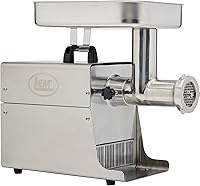
The LEM BigBite #8 is the type we'd choose for a normal kitchen.
LEM says the 0.5 HP motor processes about 7 lbs of meat per minute. That's fast enough for burgers, sausage and bulk meal prep without the bulk of a bigger machine.
LEM calls the design noise-dampening, so it runs quieter than a basic grinder.
It ships with three plates, a knife, a stomper and stuffing tubes. The stainless steel parts and permanently lubricated motor mean you don't oil it, and the whole head disassembles for cleaning.
LEM backs it with a five-year factory warranty and lifetime customer support.
The BigBite #8 is not for bones. It also has a smaller feed tube than a #12, so you'll cut meat into smaller pieces first.
That's the price of a smaller, quieter machine.
Pick the compact #8 electric type if you grind a few pounds most weeks and want to make sausage without a separate stuffer. For a family that processes bulk meat or game in season, the bigger type below is the better fit.
Which type suits bulk meat and game?
A #12 electric grinder is the type for bulk meat and game, because its wider feed tube and stronger motor move more meat per hour. The STX Turboforce II 4000 is built for that kind of volume.
STX says the Turboforce II 4000 is a size No.12 with a 2 inch feed tube and 2-1/2 inch output. Its 2000-watt motor grinds 220 to 260 lbs per hour depending on the plate and meat type.
That's a lot of meat before you need to stop.
It can also grind soft bones such as chicken, rabbit and quail. LEM's #8 is not for bones, so this is the type to pick if bone-in grinding matters to you.
The set includes six grinding plates, three stainless blades, three stuffing tubes, a kubbe attachment, a burger press and a foot pedal.
The trade-offs are size and weight. The Turboforce II 4000 is a bigger machine with a larger footprint than a #8, so it needs dedicated counter space.
For a hunter or a household buying bulk meat, that space buys real speed.
Pick the #12 electric type if you process large batches, game or soft bones. If you only grind a pound or two a week, the #8 type will serve you with less bulk.
Comparing brands in this size? Our Weston vs LEM meat grinder piece covers the same #8-style machines, and the LEM meat grinders vs Cabela's meat grinder comparison looks at the bigger names too.
How do stuffing attachments change the type you need?
Stuffing tubes change what a grinder can do, but they don't turn it into a dedicated sausage stuffer. A grinder with tubes feeds sausage straight into casing; a standalone stuffer gives you finer control over fill and speed.
All three grinders here include sausage-making gear. The LHS manual has stuffer tubes, the LEM BigBite #8 includes stuffing tubes and the STX Turboforce II 4000 adds three tube sizes plus a stuffing plate.
That's enough to get started.
The difference shows up when you make sausage often. Grinding and stuffing in one pass is fast but ties your stuffing speed to your grind speed.
A separate stuffer lets you grind the meat first and fill casings at your own pace.
For small batches, the grinder's tubes are all you need. For regular sausage making in larger amounts, the extra control is worth it.
Our sausage stuffer vs meat grinder comparison walks through when each one wins.
Pick a grinder with tubes if you stuff occasionally and want one machine. Add a dedicated stuffer later if sausage becomes a regular hobby.
What setup and care does each type need?
Each type needs a different setup and cleaning routine, and getting it right protects both the machine and your food safety. Manuals are the simplest, while electrics add a power outlet and more parts to wash.
Start with placement. A manual grinder needs a dry, smooth counter for its suction base to hold.
A no-water and smooth surface works best, so LHS says ceramic or glass counters grip the base well. Place it at the counter edge, press down to push air from the suction cup and turn the knob to lock it.
Electric grinders need an outlet and room around the machine. LEM's stainless parts disassemble easily for cleaning.
The STX unit has more accessories to store, including its plates and multiple attachments. Its patented air induction cooling system and circuit breaker are also worth knowing about, since they keep the motor from overheating during long runs.
Wash everything that touches meat in warm soapy water before first use. Dry the parts fully before reassembling, and follow the maker's cleaning guidance for the motor housing.
For the manual type, seat the blade in the right direction, edge facing the plate.
Treat cleaning as part of the type choice. More accessories mean more washing, so a simpler grinder is easier to keep in routine use.
The manual LHS and the LEM #8 both keep the parts count modest.
Which type of meat grinder should you buy?
Buy the type that matches your batch size: manual for small jobs, compact #8 electric for regular home grinding and #12 electric for bulk meat or soft bones. Most households land on the compact electric, and the LEM BigBite #8 is the pick for that group.
Here's the decision rule. Pick the LHS manual grinder if you grind small amounts and want no outlet or a cupboard-sized tool.
Pick the LEM BigBite #8 if you grind weekly and want quiet operation plus stuffing tubes. Pick the STX Turboforce II 4000 if you process bulk meat, game or soft bones and can give it counter space.
That's the whole map of the types of meat grinders. Choose by volume first, then by size, then by whether you want stuffing tubes in the box.
For the next comparison in this series, see our Weston vs LEM meat grinder breakdown before you settle on a brand.
Frequently asked questions
What does the number on a meat grinder mean?
The number on a meat grinder refers to the size of its grinding head and feed tube. A #8 is a smaller head for home batches, while a #12 has a wider feed tube and output for more meat at once.
Size affects speed and capacity, not quality.
Can I stuff sausage with a meat grinder?
Yes, many electric meat grinders include stuffing tubes so you can feed casing sausage straight from the grinder. Dedicated sausage stuffers give you more control over fill and speed, so compare both before you buy.
Do meat grinders grind bones?
Most home meat grinders are not made for bones. The STX Turboforce II 4000 can handle soft bones like chicken and rabbit, but LEM says its BigBite #8 is not for bones.
Check the maker's guidance before grinding any bone.