How to Clean a BESWOOD Slicer
To clean a BESWOOD slicer, unplug it, set the thickness dial to zero, and remove the product table and serving plate before wiping each part with warm soapy water. Keep the motor housing and switch dry, dry everything fully, and oil the slide rod and blade hub before the next slice.
On this page (10 sections)
- Why does a BESWOOD slicer need cleaning after every use?
- What should you gather before you start?
- How do you take the BESWOOD slicer apart for cleaning?
- How do you clean the blade without dulling it?
- How do you wash the product table and serving plate?
- How do you clean the body and the areas you can't remove?
- How do you dry and reassemble the slicer?
- How do you keep a BESWOOD slicer clean between deep cleans?
- Which BESWOOD slicer is easiest to keep clean?
- What mistakes should you avoid when cleaning a BESWOOD slicer?
To clean a BESWOOD slicer, unplug it, set the thickness dial to zero, and take off the product table and serving plate before washing them by hand. Wipe the blade and housing with a damp cloth, dry every part fully, then oil the slide rod.
The whole job takes about 15 minutes after a slicing session, and doing it every time is what keeps the blade sharp and the carriage smooth.
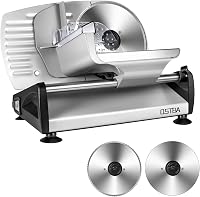
BESWOOD builds its slicers around a removable product table, and on the newer models a removable serving plate as well. Those two parts are the reason cleaning a BESWOOD slicer is easier than cleaning many fixed-table machines.
The steps below follow that design, so you can get the table off, clean the parts that touch food, and leave the electrical side alone.
Why does a BESWOOD slicer need cleaning after every use?
Clean it after any session with meat, cheese, or wet produce, because residue dries hard on the blade and in the table channel. A dry slice of bread is the one exception, and even then a quick wipe saves work later.
The blade is high-carbon steel with a chromium plating, and BESWOOD says the coating helps protect it against corrosion. Salt from ham and moisture from cheese work against that protection when they sit on the steel overnight.
Wiping the blade down after each session is the cheapest way to keep the edge and the finish.
The product table slides on a rod, and grease plus food crumbs gather in the channel beneath it. Left alone, that grit makes the carriage stiff and can scratch the aluminum body.
A 15-minute clean after slicing prevents both problems.
What should you gather before you start?
You need warm soapy water, two cloths, a soft brush, and a food-safe oil. BESWOOD includes a cleaning brush and machine oil with the Royal Red and Classic Silver models, so check the box before buying anything.
Set out a towel on the counter next to the sink for drying parts. Keep a second dry cloth for the housing, since the motor side never gets wet.
A small bowl of warm water with a drop of dish soap handles the table and blade ring without soaking anything.
If you slice cheese often, add a plastic scraper to lift hardened bits off the table. Metal tools can mark the aluminum, and a knife near the blade is a bad idea at any stage of cleaning.
How do you take the BESWOOD slicer apart for cleaning?
Unplug it, turn the thickness dial to zero, and remove the product table first. On newer BESWOOD models the serving plate lifts off too, and both parts go straight to the sink.
- Switch off at the double illuminated switch and pull the plug from the outlet.
- Turn the thickness control fully counterclockwise until the gauge plate sits flush with the blade.
- Lift the product table off its slide rod, keeping it level so crumbs don't spill into the body.
- Remove the serving plate if your model has one, then take off the blade ring guard if the manual shows how.
- Carry the removable parts to the sink and leave the machine where it sits.
Never loosen the blade nut unless you plan to remove the blade, and only do that when the manual calls for it. For most cleanings, wiping the blade in place is enough.
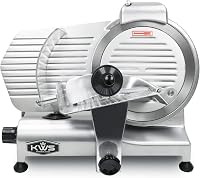
The BESWOOD 10-Inch Deli Slicer uses the same removable table, so these steps carry over if you own that model.
How do you clean the blade without dulling it?
Wipe the blade from the center outward with a soapy cloth, then dry it immediately. Keep your fingers behind the cloth and never run a hand along the cutting edge.
Start at the hub and work toward the rim on both faces. The chromium plating handles soapy water fine, and BESWOOD says the blade doesn't need frequent sharpening, so there's no reason to scrub hard or use an abrasive pad.
A soft brush gets cheese and fat out of the area where the blade meets the ring guard.
Rinse the cloth rather than the blade, and avoid pouring water near the hub. Once the blade is clean, dry it with a towel and leave it uncovered for a few minutes so any film of moisture evaporates.
Steel that stays wet is where corrosion starts.
Which BESWOOD model makes blade cleaning easiest?
The BESWOOD 10" Electric Deli Meat Slicer in Royal Red ships with a cleaning brush and a removable serving plate, which is the handiest setup for blade work in the BESWOOD range.
The brush reaches the gap between blade and guard without putting your fingers near the edge. The serving plate catches slices as you cut and lifts off as one piece when you're done, which means less food lands on the body in the first place.
How do you wash the product table and serving plate?
Wash both by hand in warm soapy water, then rinse and dry them on a towel. BESWOOD lists hand wash only care, so keep them out of the dishwasher.
Scrub the table's surface and the channel underneath with the brush. The channel collects a surprising amount of grease, and that's the part that stiffens the slide if you skip it.
Pay attention to the corners and the lip that meets the blade.
Rinse under running water, shake off the excess, and set the parts on the towel to air dry. Aluminum doesn't rust, but water spots and dried soap film look bad and can transfer to food.
A quick towel dry is worth the 30 seconds.
How do you clean the body and the areas you can't remove?
Wipe the aluminum housing and switches with a damp cloth only, and never rinse the machine or let water run into the motor area.
Move the carriage to one end and wipe the exposed slide rod with a soapy cloth, then dry it. Crumbs collect under the table's mounting point, so use the brush to sweep them out toward the edge rather than pushing them into the body.
The skidproof rubber feet and the base need only a wipe.
The double illuminated switch is sealed against splashes, but it is still electrical, so treat the whole housing as off limits for running water. If grease has built up around the switch plate, use a cloth wrung almost dry.
How do you dry and reassemble the slicer?
Let every part air dry fully, then oil the slide rod and blade hub before putting the table back. Moisture trapped under the table is the main cause of a stiff carriage.
Wipe the slide rod with a thin film of food-safe machine oil, using the oil BESWOOD includes or a mineral oil made for food equipment. A drop at the blade hub keeps the rotation smooth.
Don't oil the blade face itself, since oil on the cutting surface just transfers to your next slice of ham.
Slide the table back onto the rod until it seats, replace the serving plate, and check that the thickness dial still moves freely. Run the carriage back and forth once by hand to spread the oil.
How do you keep a BESWOOD slicer clean between deep cleans?
Wipe the blade and table after light jobs and cover the machine when it's not in use, so crumbs and dust don't settle on the steel.
A dry pastry brush clears bread crumbs in seconds. A cloth cover or a clean kitchen towel over the blade protects it from dust and keeps the finish clean.
Store the slicer with the thickness dial at zero, which holds the gauge plate against the blade and keeps fingers away from the edge.
Check the blade ring guard and the area behind it every few sessions; that's where fat hides. If you slice a lot of cheese, a monthly deeper clean of the guard pays off.
Our full guide to how to clean a deli slicer covers the same routine for other brands.
Which BESWOOD slicer is easiest to keep clean?
The models with a removable serving plate win on cleaning, because a single lift takes the catch tray off along with the food. The BESWOOD 10" Electric Deli Meat Slicer in Classic Silver is one of them.
It also carries the BESWOOD blade ring guard and the removable product table, so the cleaning sequence matches the steps above. The BESWOOD 10-Inch Deli Slicer cleans well too because its product table comes off, though the catch area needs a wipe instead of a lift.
A 33-pound machine is heavy enough to stay put on the counter while you work, so you can clean it without chasing it around the kitchen.
What mistakes should you avoid when cleaning a BESWOOD slicer?
Never put the parts in a dishwasher, never rinse the housing, and never clean the blade with your bare hand. Those three habits cause most damage and most cuts.
Skip abrasive pads on the chromium-plated blade and the aluminum body. Avoid soaking the removable parts for hours, since soapy water left in the table channel can work into seams.
Don't skip the oil on the slide rod either; a dry rod is what turns a smooth carriage into a jerky one.
Follow the manual for anything that involves removing the blade or the guard. If you want to know how the cleaning effort compares with another brand, our CUSIMAX meat slicer review covers its care routine too.
Cleaning a BESWOOD slicer comes down to one routine: unplug, zero the dial, remove the table and plate, hand wash them, wipe the blade and housing, dry, and oil the rod. Do that after every slicing session and the machine stays sharp, smooth, and ready for the next roast.
Frequently asked questions
Can the BESWOOD blade go in the dishwasher?
No. BESWOOD lists hand wash only care for its slicers, and the chromium-plated blade should be washed by hand with a cloth or brush.
Keep it flat while you wipe, then dry it fully before putting it back on the machine.
How often should you clean a meat slicer?
Clean it after every session that touches meat, cheese, or wet produce, because food residue dries onto the blade ring and table. A quick wipe of the blade and table after light bread slicing is enough until the next full cleaning.
Why does the product table need to come off?
Food and grease collect in the channel under the table and around the slide rod. Removing the table lets you wipe those surfaces and the blade ring guard, which is the area most people miss when they only wipe the top.
Is it safe to rinse the slicer under a tap?
No. The motor sits in the aluminum body and the switches are electrical, so never run water over the machine.
Wipe the housing with a damp cloth and clean the removable parts separately over the sink.
What oil should you use on a BESWOOD slicer?
Use a food-safe machine oil on the slide rod and blade hub, which is the mineral oil type BESWOOD includes with some models. A thin film keeps the carriage sliding smoothly and helps against rust on the steel parts.