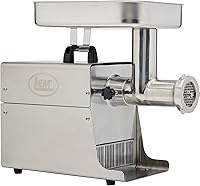
LEM BigBite: Which Is Better? (November 2026)
The LEM BigBite #8 is the better overall pick for most home kitchens. Choose the #12 when you regularly process medium to large batches or need a grinder that handles raw chicken bones.
On this page (12 sections)
- LEM BigBite #8 vs #12 meat grinder: the quick verdict
- How do the LEM BigBite #8 and #12 compare side by side?
- Which grinder has more useful power?
- Which LEM grinder processes meat faster?
- When does bone handling decide the choice?
- Which grinder is better for sausage making?
- What do both grinders include and how does cleanup work?
- How do size and weight affect daily use?
- Who should buy the LEM BigBite #8?
- Who should buy the LEM BigBite #12?
- What other grinder comparison should you read?
- Which LEM BigBite grinder should you choose?
The LEM BigBite #8 is the better overall choice for most home kitchens. The LEM BigBite #8 vs #12 meat grinder decision changes when you process large batches often or need raw chicken bone handling, where the #12 earns its higher score.
Both are electric LEM grinders with stainless steel construction, noise-dampening designs and equipment for grinding and sausage stuffing. The main differences are motor power, stated grinding rate, intended batch size and bone handling.
We compared the product specifications and practical trade-offs rather than treating the larger number as an automatic reason to buy the larger machine.


LEM BigBite #8 vs #12 meat grinder: the quick verdict
Choose the LEM BigBite #8 for regular home grinding, small to medium batches and a lower overall commitment. Its 0.5 HP motor processes about 7 lb of meat per minute, and the grinder includes three plates, a knife, a stomper and stuffing tubes.
Choose the LEM BigBite #12 for medium to large batches or raw chicken bones. Its 0.75 HP motor processes up to 11 lb per minute, and its product information specifically includes raw chicken bone handling.
The #8 wins overall because it covers the common home uses with a lower stated processing rate that still suits repeated grinding, burgers, sausage and pet food preparation. The #12 is the specialist pick for buyers who will use its extra capacity in practice.
Neither is a tiny appliance. Both measure 20.24 inches long, 9.13 inches wide and 15.98 inches high, so counter depth and storage matter before you choose between them.
How do the LEM BigBite #8 and #12 compare side by side?
The #12 has the stronger motor and faster stated processing rate, while the #8 is slightly lighter and better matched to smaller batches.
| Product | Best for | Motor | Processing speed | Material | Our score |
|---|---|---|---|---|---|
| LEM BigBite #8 Meat Grinder | regular home batches | 0.5 HP | About 7 lb per minute | Stainless steel | 9.1 |
| LEM BigBite #12 Meat Grinder | large batches and bones | 0.75 HP | Up to 11 lb per minute | Stainless steel | 8.9 |
The LEM BigBite #8 weighs 32.6 pounds. The LEM BigBite #12 weighs 33.1 pounds, a difference of 0.5 pound despite the gap in motor power.
Both models use electric power and stainless steel material. Each is designed for grinding, and each includes equipment for sausage stuffing.
The biggest practical difference is not the outside size. It is how much work you expect the grinder to do in one session.
A buyer who grinds occasionally may get little value from the #12's higher rate, while a hunter, chef or bulk-food preparer can make better use of it.
Which grinder has more useful power?
The LEM BigBite #12 wins for motor power with 0.75 HP versus 0.5 HP in the #8. That difference supports the #12's role in medium to large batches and its ability to process raw chicken bones.
The #8's 0.5 HP motor is still built for regular home use. LEM describes it as suitable for small to medium batches, so it fits households that grind meat for burgers, sausage, pet food and meal preparation without needing the larger model's output.
Motor power matters most when the grinder is used repeatedly or when the food being processed places greater demands on the machine. It matters less if your normal session is a modest amount of trimmed meat.
The #12's stronger motor also makes it the clearer choice for buyers who want one grinder for a wider range of food-processing jobs. The #8 remains the more sensible choice when that extra capability would sit unused.
Which LEM grinder processes meat faster?
The #12 has the faster stated rate, at up to 11 lb per minute compared with about 7 lb per minute for the #8. That difference can shorten a large grinding session.
A rate of about 7 lb per minute gives the #8 a strong fit for home cooks preparing several pounds at once. It also suits sausage making when the batch size stays within the small to medium range.
The #12's up-to-11-lb-per-minute figure favors bulk processing. That includes larger meat preparation sessions, game processing and households that want to turn a substantial amount of meat into ground portions in less time.
These figures describe the product information, not a promise that every food load will move at the same speed. Meat temperature, preparation and the way you feed a grinder all affect the pace of real work.
When does bone handling decide the choice?
Choose the LEM BigBite #12 if raw chicken bones are part of your plan. The #8 is not for bones, while the #12 is described as handling raw chicken bones.
This is a firm dividing line between the two models. If you prepare pet food that includes raw chicken bones, the #12 is the only suitable choice in this comparison.
The #8 still covers several other uses. Its product information names burgers, sausage, pet food from scraps and bulk meal preparation, but the grinder should stay with meat and the other uses described for it.
Use only foods that match the product's stated purpose. Bone handling is not a detail to assume from motor power alone, so the #12's specific description matters more than simply seeing that it has a larger motor.
Which grinder is better for sausage making?
Both grinders suit sausage making, but the #8 is the better choice for ordinary home batches. Each includes three plates, a knife, a stomper and stuffing tubes.
The included plates give you more than one grinding option, while the stuffing tubes support the step after grinding. That makes either machine useful for a workflow that moves from prepared meat to sausage filling.
Pick the #8 when sausage is a regular kitchen project and your batches are small to medium. Its about-7-lb-per-minute rate gives you a clear pace without paying for capability you may not use.
Pick the #12 when sausage making is part of larger processing days. The higher stated rate gives the larger model a practical edge when you are handling more meat at one time.
For either machine, organize the meat, plates and casings before starting. A clean setup makes it easier to move from grinding to stuffing without stopping to search for parts.
What do both grinders include and how does cleanup work?
Both models include the core pieces for grinding and sausage stuffing, and both disassemble for cleaning. Stainless steel parts and a permanently lubricated motor also shape the routine care.
The #8 includes three plates, a knife, a stomper and stuffing tubes. The #12's product information also names three plates, a knife, a stomper and stuffing tubes, with the description adding a stainless steel knife, head and auger, a large meat pan, coarse and fine plates, a stuffing plate and 3 stuffing tubes.
The shared setup is useful if you want one appliance for ground meat and sausage rather than buying separate equipment. The #12's description also names a storage drawer beneath the grinder head for plates and accessories.
After use, separate the parts that come away for cleaning and wash them using a food-safe routine suited to the materials. The permanently lubricated motor is not a reason to put the motor housing in water.
Dry cleaned parts before storage. Keep the knife, plates and tubes together so the next session starts with the parts needed for the chosen grind and stuffing job.
How do size and weight affect daily use?
The two grinders need the same listed counter footprint, so storage and lifting are nearly the same choice. The #8 is only slightly lighter, at 32.6 pounds compared with 33.1 pounds for the #12.
The shared dimensions are 20.24 inches long, 9.13 inches wide and 15.98 inches high. Measure the counter or shelf where the grinder will stand, including the space needed to place meat and parts beside it.
The weight makes both machines better suited to a planned work area than to constant moving. If you store the grinder after every use, choose a location where lifting it out is manageable and where stainless steel parts can dry fully.
The small weight gap should not decide the purchase on its own. Choose by batch size and bone handling first, then use the dimensions to confirm that the model fits your kitchen routine.
Who should buy the LEM BigBite #8?
Buy the LEM BigBite #8 if you want a durable electric grinder for regular home use and small to medium batches. Its 0.5 HP motor, stainless steel build and about-7-lb-per-minute rate cover the needs of many household cooks.
It suits burger preparation, sausage making, game processing and pet food from suitable scraps. The included plates and stuffing tubes also make it useful when grinding and sausage work are part of the same cooking routine.
The #8 is the better value of capability for a buyer who does not need raw chicken bone handling. Its slightly lower weight does not change the footprint, but it does make the smaller model the lighter one to move.
Choose this model when your goal is dependable repeat use without stepping up to the larger motor. Its score of 9.1 reflects that broad fit for ordinary home grinding.
Who should buy the LEM BigBite #12?
Buy the LEM BigBite #12 when your sessions are medium to large or raw chicken bones are part of the job. Its 0.75 HP motor and up-to-11-lb-per-minute rate give it the stronger processing profile.
The #12 also suits hunters, chefs and households that process larger amounts of meat at once. The product information covers beef, pork, poultry, lamb and venison, and it describes raw chicken bone handling.
Its slightly greater weight is a minor trade-off because the two models share the same listed dimensions. The more meaningful question is whether you will use the higher rate and bone capability often enough to justify choosing the larger machine.
The #12 earns a score of 8.9 because it is powerful and versatile, but its extra capability is less useful for a household that mostly handles smaller meat batches.
What other grinder comparison should you read?
The LEM BigBite #8 and #12 are the right comparison when you already want a LEM grinder. If brand choice is still open, compare the broader Weston vs LEM meat grinder options before deciding.
For a different size-focused comparison, read #8 vs #12 meat grinder: which size fits you?. It can help you think through batch size and grinder class without focusing only on these 2 LEM models.
If you are considering a competing larger grinder, the Weston #12 meat grinder review gives you another path to compare against the LEM BigBite #12.
Buyers comparing brands can also review LEM vs Cabela's meat grinders before committing to a grinder system.
Which LEM BigBite grinder should you choose?
Choose the LEM BigBite #8 for most home kitchens. It has the higher score, a 0.5 HP motor, an about-7-lb-per-minute rate, stainless steel construction and the plates and tubes needed for grinding and sausage stuffing.
Choose the LEM BigBite #12 when your decision depends on raw chicken bones or larger, faster processing. Its 0.75 HP motor and up-to-11-lb-per-minute rate give it the clear edge for those jobs.
The final LEM BigBite #8 vs #12 meat grinder rule is simple: pick the #8 for regular home batches, and pick the #12 when the larger motor, faster rate or bone handling will be used often. Both occupy the same listed footprint, so your work pattern should decide the winner.
Frequently asked questions
What does the number mean on a LEM meat grinder?
The #8 and #12 identify grinder size classes. In this comparison, the #8 has a 0.5 HP motor and processes about 7 lb per minute, while the #12 has a 0.75 HP motor and processes up to 11 lb per minute.
Can the LEM BigBite #8 grind bones?
No. The LEM BigBite #8 is intended for meat grinding and sausage stuffing, and its product information says it is not for bones.
Choose the LEM BigBite #12 if raw chicken bone handling is a key reason for buying.
Are the LEM BigBite #8 and #12 the same size?
Both are listed at 20.24 inches long, 9.13 inches wide and 15.98 inches high. The #8 weighs 32.6 pounds, while the #12 weighs 33.1 pounds, so the larger model is only slightly heavier.
Do both LEM BigBite grinders use stainless steel?
Yes. Both models have stainless steel construction and stainless steel parts.
That gives either grinder a durable material choice for regular food preparation and makes disassembly for cleaning part of the normal workflow.