How Much Does a Meat Grinder Cost?
A meat grinder costs from about 30 dollars for a manual crank model up to 300 dollars or more for a large electric no.12 unit. Most home cooks land in the mid range for a 500 to 2,000 watt electric grinder.
On this page (8 sections)
- What does a meat grinder cost by type?
- What do you pay for a manual meat grinder?
- What does a compact electric meat grinder cost?
- What does a larger no.12 meat grinder cost?
- What raises the price within the same size?
- What does the whole setup cost beyond the grinder?
- Should you spend more for a bigger grinder?
- How much does a meat grinder cost for your kitchen?
A meat grinder costs from about 30 dollars for a manual crank model up to 300 dollars or more for a large electric no.12 unit. Most home cooks land in the mid range for a 500 to 2,000 watt electric grinder.
What you pay tracks three things: how the grinder is powered, how big its grinding head is, and what comes in the box. That last point matters more than people expect, because stuffing tubes, extra plates and a foot pedal change the total cost of getting set up.
What does a meat grinder cost by type?
Manual grinders sit at the bottom of the range and electric models climb from there. A hand-crank unit costs a fraction of a powered one because it has no motor, no cord and no circuit breaker.
Electric grinders divide into compact home units and larger no.12 machines. The compact group runs a 500 watt motor and a small no.8 head, which suits a few pounds of meat at a time.
The bigger group adds wattage, a wider feed tube and more attachments.
Where you buy also shifts the number. A kitchen store charges more than a big online retailer for the same model, and bundles with sausage-making gear carry a premium over the grinder alone.
The lesson for budget planning: decide your type first, then compare models within it. Jumping from manual to electric is a bigger price step than moving up a size within electric.
Type also sets what the machine can do, since the powered models carry the plates, tubes and pushers you would otherwise buy piece by piece.
What do you pay for a manual meat grinder?
A manual meat grinder is the cheapest way into home grinding, at roughly 30 dollars to 70 dollars. You turn a crank by hand, so there's no motor to fail and nothing to plug in.
These units suit small jobs: a pound or two of beef for burgers, or stuffing a short batch of sausage. They also store easily in a drawer or cupboard.
The trade-off is effort. Grinding a larger roast by hand takes time and arm work, and coarse plates clog more often when you push meat through slowly.
Manual grinders also tend to have smaller feed openings, so you cut meat into smaller pieces first.
For anyone who grinds once or twice a season, the low cost is the main draw. For weekly grinding, the time cost adds up faster than the price saving.
A manual unit also tends to skip the sausage stuffing tubes that come with most electric models, so price the attachments you need before you compare the two totals.
What does a compact electric meat grinder cost?
A compact electric meat grinder lands in the mid range, roughly 90 dollars to 180 dollars. It has a motor, a no.8 grinding head and enough power for regular home batches.
The LEM MightyBite #8 is a clear example of this tier. It's a 500 watt aluminum grinder that LEM says processes 4 to 5 lbs per minute.
The box includes stainless steel plates, a knife, a stomper and three stuffing tubes, so it doubles as a sausage stuffer. LEM backs it with a two-year factory warranty and lifetime customer support, and that warranty is part of what the price covers at this level.
This tier is the sweet spot for a household that grinds a few pounds at a time. The aluminum body keeps the weight down at 16.5 pounds, which matters if you lift the grinder in and out of a cupboard.
Step up only if you process whole animals or feed a big freezer.
What does a larger no.12 meat grinder cost?
A larger no.12 electric grinder costs more, often from about 180 dollars to 300 dollars and up. The extra money buys wattage, a wider feed tube and more accessories.
The STX Turboforce II 4000 is a no.12 grinder with a 2 inch feed tube and a 2-1/2 inch output. STX rates it at 2,000 maximum watts and says it grinds 220 to 260 lbs per hour depending on the plate and meat.
It also handles soft bones such as chicken and rabbit.
The package is broad: a foot pedal, six grinding plates, three stainless blades, sausage tubes, a kubbe maker, meat claws and a burger press. STX backs it with a three-year warranty.
This tier suits hunters, bulk buyers and anyone feeding a large freezer. Our guide to what size meat grinder do I need helps you match head size to batch size before you spend.
How do you read the wattage on a grinder like this?
STX lists a 2,000 maximum watt figure and describes a locked motor wattage in the same breath. Read both numbers together with the hourly output rating, since watts alone tell you less than watts plus pounds per hour.
Treat the 220 to 260 lbs per hour figure as a ceiling, not a promise. A foot pedal is the other feature to weigh at this tier, because it frees both hands while you feed the tray.
What raises the price within the same size?
Wattage, build material and the attachment bundle move the price most within one grinder size. Two no.8 grinders can sit at very different totals.
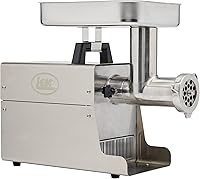
The LEM BigBite #8 shows how features stack. It's a 0.5 HP stainless steel grinder that LEM says processes about 7 lbs per minute, and the box adds three plates, a knife, a stomper and stuffing tubes.
LEM gives it a five-year factory warranty.
Compare that with the MightyBite #8, which runs 500 watts in aluminum with a two-year warranty. The BigBite's stainless build, higher output and longer warranty are the main reasons it costs more.
The stainless body also pushes the weight to 32.6 pounds, so the sturdier build costs you both money and counter space.
Beyond the motor and metal, look at what's included. A grinder with three stuffing tubes and several plates saves you buying those separately.
A bare unit looks cheaper until you price the extras. Our roundup of the best meat grinders under 200 shows where each tier lands.
What does the whole setup cost beyond the grinder?
Plan for a little more than the grinder price once you add storage and food safety gear. The grinder is the big line, but the extras add up.
Freezer bags or a vacuum sealer keep ground meat from burning, and a second cutting board keeps raw meat away from cooked food. Sausage makers need casings and possibly a dedicated stuffer if the grinder's tubes are slow for big runs.
Sharpening matters too: dull plates and knives smear meat instead of cutting it, so a sharpening kit or replacement blades belong in the long-term budget.
Our guide to sharpening and upkeep covers keeping the cutting parts in shape. LEM sells replacement parts for a large variety of its products, past and present.
None of these extras is expensive on its own, but together they can add a meaningful slice to what you spend in the first month of grinding.
Should you spend more for a bigger grinder?
Spend more only if your batches regularly exceed what a compact grinder handles. A bigger motor and wider feed tube pay off for hunters and bulk buyers, not for someone grinding two pounds of beef a week.
The practical test is time per session. A 500 watt no.8 unit at 4 to 5 lbs per minute is quick for small batches.
A no.12 unit at 220 to 260 lbs per hour shines when you process a whole deer in one sitting.
Warranty length also justifies a higher price for heavy users. A five-year warranty on the LEM BigBite covers more years of regular grinding than a two-year term on a compact model.
If you're still deciding between electric models, our guide to the best electric meat grinder for home use compares them by batch size and features. A slicer is a separate purchase, so see how much is a meat slicer if you're outfitting a whole prep station.
What does each LEM model buy you at its price?
The MightyBite runs an aluminum body and a two-year warranty and is built for regular small batches. The BigBite steps up to stainless steel, a 0.5 HP motor, a 7 lbs per minute rating, three plates and a five-year warranty.
Both include a knife, a stomper and stuffing tubes, and neither grinds bones. If you want bone capability, move to the STX no.12 tier and its soft-bone rating.
How much does a meat grinder cost for your kitchen?
For most homes, a compact electric grinder in the mid range covers the job at a fair cost. Choose a manual grinder only for occasional small batches, and a no.12 unit only if you process bulk meat or game.
Match the price to your real grinding volume rather than the biggest motor you can afford. A grinder that's too small frustrates you weekly; one that's too large sits unused and costs more than it returns.
When you know how much a meat grinder costs at each tier, the choice comes down to batch size and warranty. Start with your typical session, then buy the model that fits it.
Frequently asked questions
Is a cheap meat grinder worth buying?
A low-cost manual grinder works for small batches of ground beef or sausage stuffing. If you grind meat more than a few times a month, a 500 watt electric model with a two-year warranty costs more up front but saves time and holds up longer.
Does a higher wattage meat grinder cost a lot more?
Not always in a straight line. Wattage drives price more than size does in some lines, so a 2,000 watt no.8 grinder can cost more than a 500 watt no.8 model without a huge jump.
Match watts to how much meat you grind per session.
What else do I need to buy besides the grinder?
Budget for freezer bags or a vacuum sealer for the ground meat, and a second cutting board so raw meat and cooked food stay separate. Sausage makers also need casings and a stuffer if the grinder's stuffing tubes feel too slow for large batches.
Why do no.8 and no.12 grinders cost different amounts?
The number refers to the grinding head size and feed tube diameter. A no.12 grinder like the STX Turboforce II 4000 has a 2 inch feed tube and takes larger cuts, so it usually costs more than a compact no.8 unit built for smaller batches.
Can I grind bones in a home meat grinder?
Only grinders rated for bone can handle it. The LEM MightyBite and LEM BigBite grinders are not for grinding bones.
The STX Turboforce II 4000 handles soft bones such as chicken and rabbit, so check the maker's rating before you feed bones through any grinder.